There is a discussion in the Talmud that presents a dilemma: If one’s father asks for a glass of water, and one’s mother asks for a glass of water at the same moment, whose request takes precedence? The question arises within a larger discussion of the mitzvah of honoring one’s father and mother, kibbud av va’em.
At first glance, honoring two parents whose wishes conflict seems impossible. One can fulfill one request immediately, but the other must wait. Yet our parashah presents a striking example of a situation in which a single act enables Jacob to honor both of his parents at the same time.
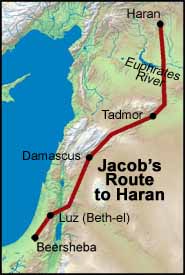
Our parashah opens with the words, “Jacob departed from Beersheba and traveled to Haran.” The rabbis ask: Why does the Torah mention his departure from Beersheba? Would it not be sufficient simply to tell us where he was going?
They answer that when a person moves from one place to another, there are often two dimensions to the journey. One is leaving the place where one currently resides; the other, and usually more significant purpose, is arriving at a new destination.
In Jacob’s case, however, these two purposes reflect the wishes of two different parents. Rivka tells him to leave Beersheba in order to escape the murderous intentions of his brother Esau. Her primary concern is saving Jacob’s life. Isaac, on the other hand, sends Jacob to Haran for an entirely different reason. Distressed that Esau has married Canaanite women, Isaac wants Jacob to find a wife from Rivka’s family. Therefore, he instructs him to journey to Haran, where her relatives live.
What makes Jacob’s journey remarkable is that he simultaneously fulfills both parental wishes. By leaving Beersheba, he honors his mother’s desire to protect him from Esau. By traveling to Haran, he honors his father’s hope that he will establish a family within their extended kinship network. The Torah therefore records both movements: “Jacob left Beersheba and went toward Haran.” Every word matters. The departure honors Rivka; the destination honors Isaac.
Perhaps this is why the Torah describes both ends of the journey. Unlike the Talmud’s case, in which a child seems forced to choose between father and mother, Jacob discovers a path that allows him to honor them both at the same time. His act becomes an instance of kibbud av va’em par excellence!


Leave a Reply