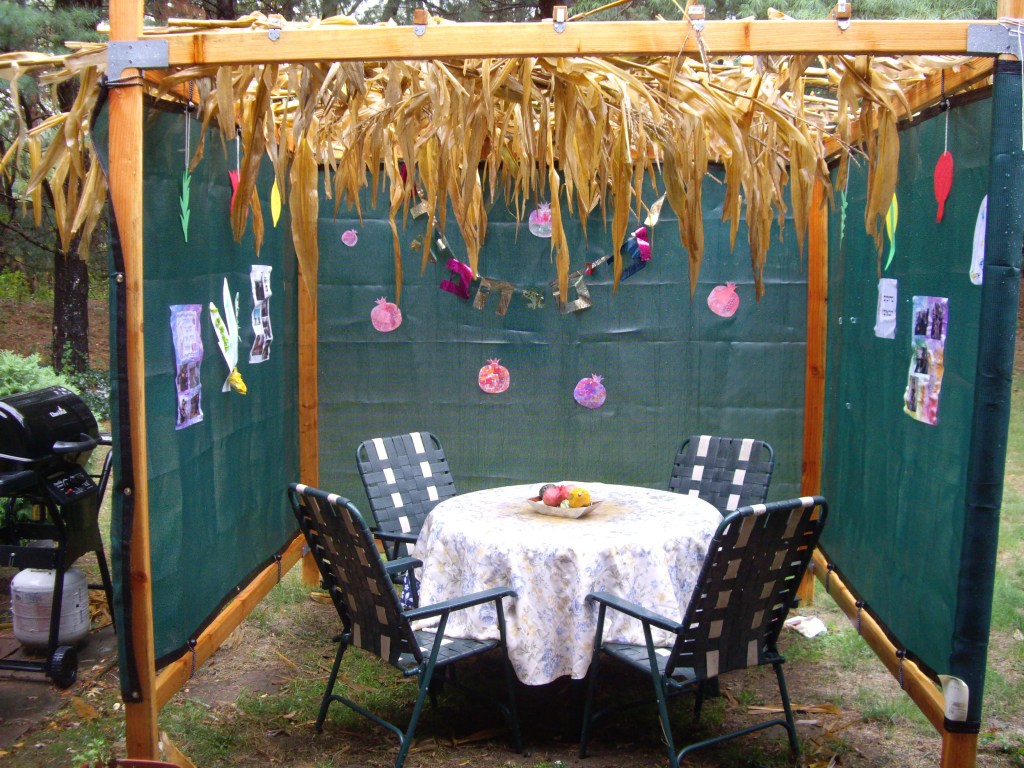
The Torah emphasizes “happiness” on Sukkot, more than with any other Festival. In fact, another name for Sukkot is “zman simchateinu” – “The Time of our Happiness”.
Rabbi Aden Steinsaltz describes dwelling in a Sukkah as a kind of “prescription for happiness”. He explains that in living in the fragile, temporary shelter of the Sukkah all week we voluntarily abandon the comforts of home and thus symbolically recreate the original conditions of the People of Israel at the time of the exodus from Egypt. They had only a belief in God and a hope for the future, but no Torah, no Land, few possessions and an ever-present anxiety about where their next meal would come from.
Putting ourselves in their place even briefly, we might see life differently. Sukkot falls at harvest time, which for some is a time of joy and abundance and for others a time of frustration and sadness. But dwelling in the Sukkah is the great equalizer. It reminds us that true happiness is found not in what we accumulate, but in our ability to appreciate the simple essentials of life. By stripping away all but the necessities of life our attention shifts to what we have, rather than what we lack. We rediscover the value of the gift of life itself, and its many blessings. In doing so we begin to cultivate the joy and happiness that the Torah commands on this holiday.
Shabbat Shalom and Chag Sameach


Leave a comment