Egypt occupies a large space in Jewish consciousness. Our Torah tells us the Jacob descended to Egypt with 70 members of his family to escape famine in the Land of Canaan. The descendants of that family were enslaved. The Festival of Passover is devoted to telling the story of our bondage in Egypt and re-enacting some aspects of that experience. We eat matzah and bitter herbs as our ancestors did on that first Passover in Egypt. The eating of the Afikomen at the conclusion of the meal represents the Passover sacrifice the Israelites consumed on the night of their liberation. Throughout the year, morning and night, we remember our bondage and our liberation in our prayers. Egypt was our womb. It was in Egypt that we grew from a family into a people. Time and again the Torah reminds us to be compassionate toward the widow, the orphan and the foreigner among us, because we know from our experience in Egypt what oppression feels like.
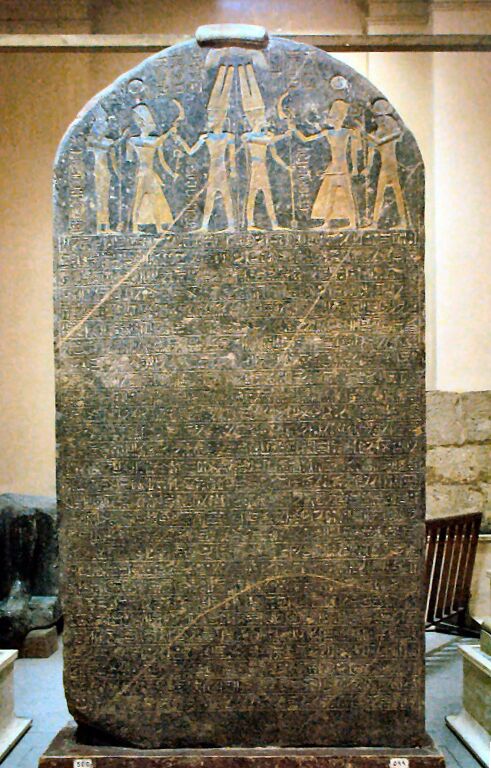
In contrast, the Israelites do not seem to occupy any space in the consciousness of the ancient Egyptians at all. The only mention of ancient Israel that we know of by the Pharaohs is found on the Mernepteh Stele, (pictured above) now housed in the Egyptian Museum in Cairo. This granite slab commemorates, in hieroglyphics, the military victories of the Pharaoh Merneptah, who reigned ten years, from 1213 to 1203 BCE. After recounting victories against ancient Libya and her allies, the final three lines on the stele refer to Merneptah’s military campaigns in Canaan. There it says, “Israel is laid waste — its seed is no more.”
To paraphrase Mark Twain, “the reports of Israel’s demise were greatly exaggerated.”
Shabbat Shalom!


Leave a comment