Out of Egypt

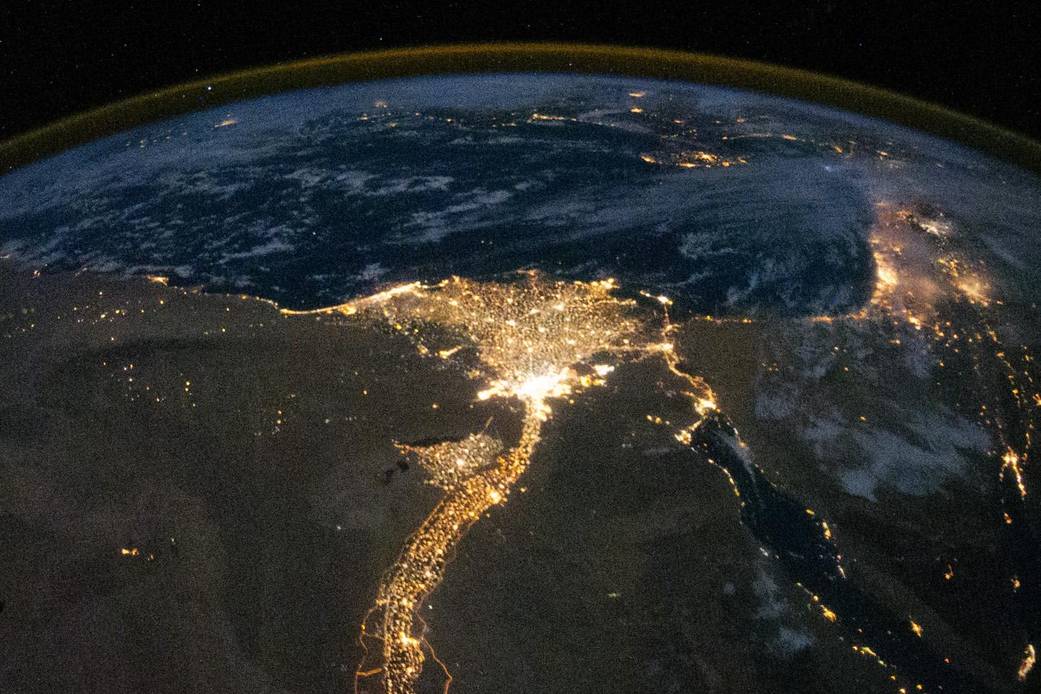
This photograph from NASA shows how the Egyptian population is concentrated along the Nile River. 95% of Egyptians live within a few miles of the Nile.

My wife, Middy, and I just returned from a two-week trip to Egypt. The impetus for visiting Egypt was to visit our son, who is living temporarily in Cairo. We decided to combine that visit with an organized tour of Egypt which focused on the ancient historical sites of the Pharaohs.

Egypt is of course the place where the Jewish people were born. The Torah tells us that Jacob went down to Egypt from Canaan with his family of seventy souls. There that family grew became a great people, so great that the Egyptians were fearful of them and enslaved them. Our enslavement in Egypt and ultimate liberation is foundational to our Jewish identity. It was in Egypt that the Jewish people first came to know and understand the power and majesty of the God of Israel.

Both ancient and modern Egyptians call their country “MSR” or “Misr”. The Biblical and Modern Hebrew word for Egypt is “MiSRayim”. In Egyptian, the name “MSR” means “country” or “border”. In Hebrew the word means “narrow strait”. It can refer both to the geography of the country, as seen above in the picture from NASA, as well as the place of constriction we find ourselves in when we are in pain. “From the narrow straits (MSR) I called to You,” writes the psalmist, “God answered me and brought me into a spacious place.” (Psalm 118).

The Greek historian Herodotus described Egypt as “the gift of the Nile”. There is no rainfall in Egypt. Without the river, there could be no Egypt. Perhaps that is why the first plague turned the Nile to blood.

I’ll write more on our trip to Egypt in the coming weeks.

Shabbat Shalom.

6 responses to “Out of Egypt”

  1. Gaines, Linda J Avatar
    Gaines, Linda J

    We visited in 2019. Fascinating.

    Get Outlook for iOShttps://aka.ms/o0ukef


    Like

  2. Rabbi Michael G. Kohn Avatar
    Rabbi Michael G. Kohn

    Welcome home.

    Michael

    Rabbi Michael G. Kohn הרב מרדכי בן רפאל יצחק

    Rabbi Emeritus, Temple B’nai Abraham 234 Sherman Avenue C-23 Meriden, CT 06450 (347) 834-3040 — Cell mgkohn@gmail.com

    Like

  3. Susan Roberts Avatar
    Susan Roberts

    wow what an interesting story i never knew this was your first start in life i never got to pray for your safe return i am praying you brought home some great shots to see i will be posting this Amazing story wow…

    Like

  4. Amazing photo along with informative info re: Egypt. Thank you. Welcome home.

    Shabbat Shalom

    Linda

    Like

  5. Thanks very interesting.If you look at the map if moses had turned left instead of right we would have all the oil🤠

    Yahoo Mail – Email Simplified

    Like

  6. davidloiterman Avatar
    davidloiterman

    Thank you for posting this informative piece of human history and how it relates to those of the Jewish faith.

    I always find it of interest to explore how the biblical narratives roughly approximate the known development of human history in this part of the world. In particular how humans developed agricultural processes related to the seasonal flooding along the Nile.

    Many of the references in the tanach about seasons and timing relate to how human beings developed the calendar and the timing related to planting and harvesting as human culture progressed from ” Hunter-Gatherers ” to plant and animal husbandry. A great deal of this required insight into celestial events related to the position of the moon and star formations as the seasons evolved. . .not to mention the abilities to determine direction and travel over long distances.

    Keep in mind that our current calendar system was developed relatively recently following the Roman conquest and destruction of the second temple

    I’ve recently been interested in how the content of the seder is related to many intellectual processes for sharing and passing along information developed during the Helenistic period of human history.

    Like

Leave a reply to Rabbi Michael G. Kohn Cancel reply