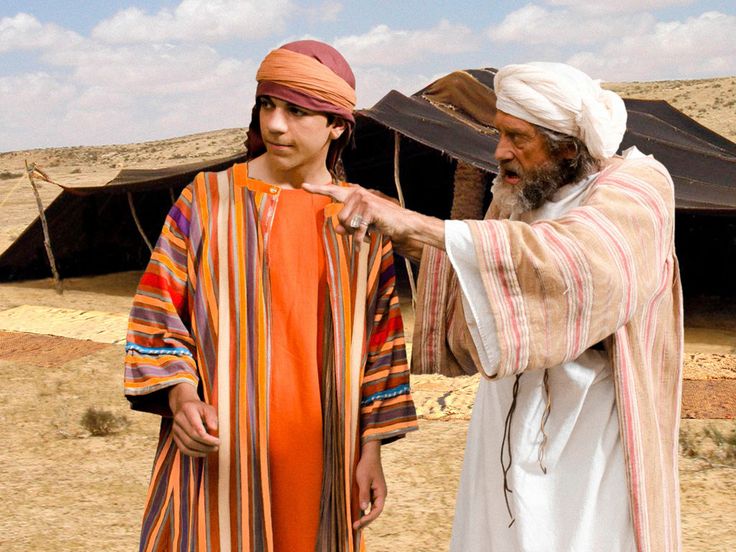
In our Torah reading this week, Joseph is dispatched by his father Jacob to check on the welfare of his brothers and on the flocks they are pasturing near Shechem. (Genesis 37:12) Joseph loses his way and encounters a man who asks him what he is seeking. Joseph replies that he is looking for his brothers who are pasturing their flock, and the man points him in the right direction. You may know the rest of the story. Joseph finds his brothers, who, as we know, are jealous of his place in the family as his father’s favorite, and furious at him for taunting them with this fact. The brothers strip Joseph of his tunic, cast him in a pit, and decide to sell him to a passing caravan. Joseph ends up a slave in Egypt. This leads to a whole series of events that are retold in the remainder of the Book of Genesis. The Book culminates with the family of Jacob descending to Egypt to escape a famine in the Land of Canaan, under the protection of Joseph, who has risen from his slave status to becoming second in command to the Egyptian Pharaoh. The family of Jacob will grow into the People of Israel while in Egypt, setting the stage for the Exodus, the giving of the Torah and the long years of the journey in the Sinai wilderness.
What would have happened had Joseph not found his brothers? Would he have returned to his father telling him he had failed in his mission? Was his meeting with “the man” who pointed him in the right direction just a random occurrence? The rabbis don’t think so.
To the rabbis of the Talmud, the appearance of the man to guide Joseph to his destination is an act of divine intervention. Some identify “the man” as the angel Gabriel, disguised in human form to guide Joseph to his ultimate destiny and his part in the fulfillment of God’s plan. Others understand “the man” to be just that, a mere mortal, but one sent by God to lead Joseph to his brothers and ultimately fulfill the Divine design.
Perhaps there is a lesson here for us all. Rabbi Lawrence Kushner writes that ordinary people can be messengers of the Almighty. “They go about their tasks in holy anonymity, often, even unknown to themselves. Yet, if they had not been there, if they had not said what they said or did what they did, it would not be the way it is now. We would not be the way we are now. Never forget that you too, may be a messenger.”

 Rabbi Marc D. Rudolph
Leave a reply to joyceflescher Cancel reply