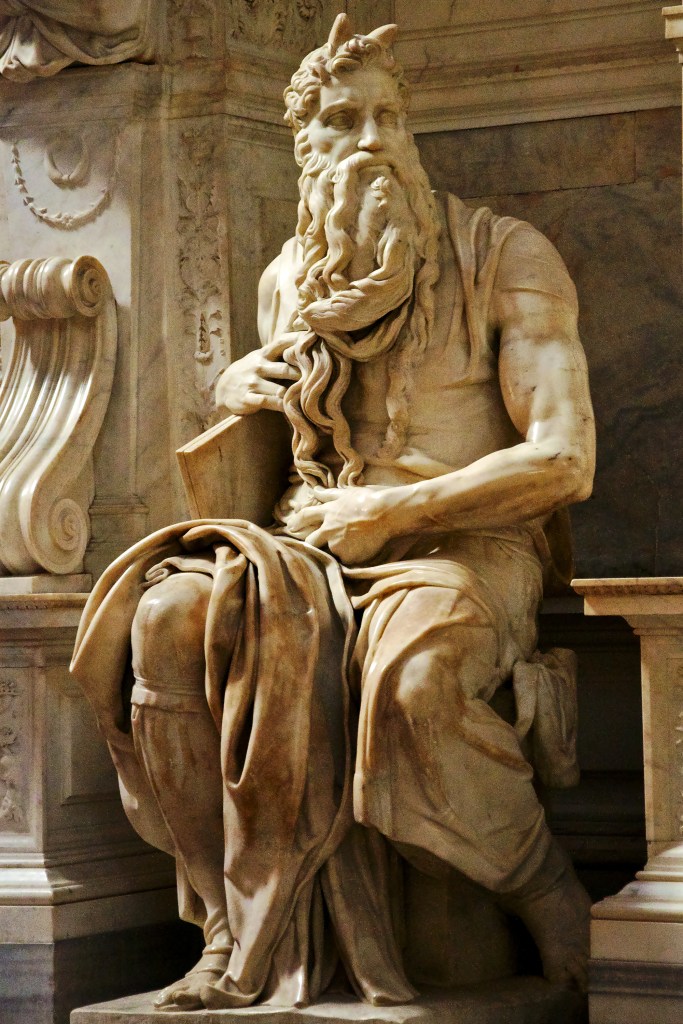
This week we are reading about the giving of the Ten Commandments in our weekly Torah portion. But the Torah reading does not open with the Ten Commandments. The weekly portion opens with Jethro, Moses’ father-in-law, bringing Moses’ wife, Zipporah, and his two sons, Gershom and Eliezer, to the encampment. They did not participate in the Exodus from Egypt. They remained in Midian while the Ten Plagues and the Exodus from Egypt were taking place.
The question arises — Why do we read about the visit of Jethro first, and only then read about the giving of the Ten Commandments? Our sages teach that we should pay attention to the behavior of Moses and his father-in-law.
Moses goes out to meet his father-in-law. This in itself is an act of hospitality and respect. As we will see later, Moses is a busy man, yet he does not wait for his father-in-law to arrive at his tent but takes the time to go out and greet him. He bows down to him, he kisses him, they ask about one another’s welfare, and then go to Moses’ home.
Jethro, who is not Jewish, who is a Midianite priest, hears all about the deliverance of Israel and rejoices over it. Jethro, who is not Jewish, blesses the God of Israel and even acknowledges the God of Israel as the Supreme Deity. Later on, when Jethro observes how Moses governs the people, he makes a suggestion as to how Moses might modify his work week. Does Moses tell him to mind his own business? Does Moses reject Jethro’s advice because Jethro is not Jewish? On the contrary, Moses is open to outside influences. He is not closed minded. He recognizes a good idea when he hears one. He will accept help from wherever it may come. Despite his wisdom and experience, he understands that he can still learn from others.
דרך ארץ קדמה לתורה
In Hebrew there is a word for this type of behavior — Derekh Eretz. It means the proper way of treating one another. It means ethical behavior based on common sense. Even before the giving of the Law, there was a code of behavior that is based on the intellect, a basic respect for others for which one does not have to have the Laws of the Torah to instruct us. The meeting between Jethro and Moses symbolizes that the Israelites were living according to this unwritten code. This was a pre-requisite, as it were, to receiving the Torah. Now we know they have earned the privilege of matan Torah, the giving of the Torah.
Here is a short poem by Israeli poet Bella Shor based on Jethro’s response to Moses when Moses told him about the Ten Plagues and the Exodus from Egypt. “Jethro said, ‘Blessed is God who saved you from Egypt and from Pharoah”. (Exodus 18:10)
Blessed is God/That Jethro came/And taught us to say/Blessed is God.
בָּרוּךְ ה׳
שֶׁבָּא יִתְרוֹ
וְלִמְּדָנוּ לוֹמַר
בָּרוּךְ ה׳


Leave a comment