Our parasha this week, Tetzaveh, opens with the words, “You shall command the People of Israel….” It is striking that it does not begin with the usual formula, “God spoke to Moses.” Even more surprising, the name of Moses does not appear anywhere in this parasha. From the beginning of Exodus through the end of Deuteronomy, Tetzaveh is the only weekly portion in which Moses’ name is absent.
The sages offer several explanations, but many note that the 7th of Adar, which fell this past Tuesday, is both the date of Moses’ birth and the date of his death. Since Moses dies on this day, his name is omitted from the Torah portion read during this week as a subtle way of marking his yahrzeit and honoring his memory.
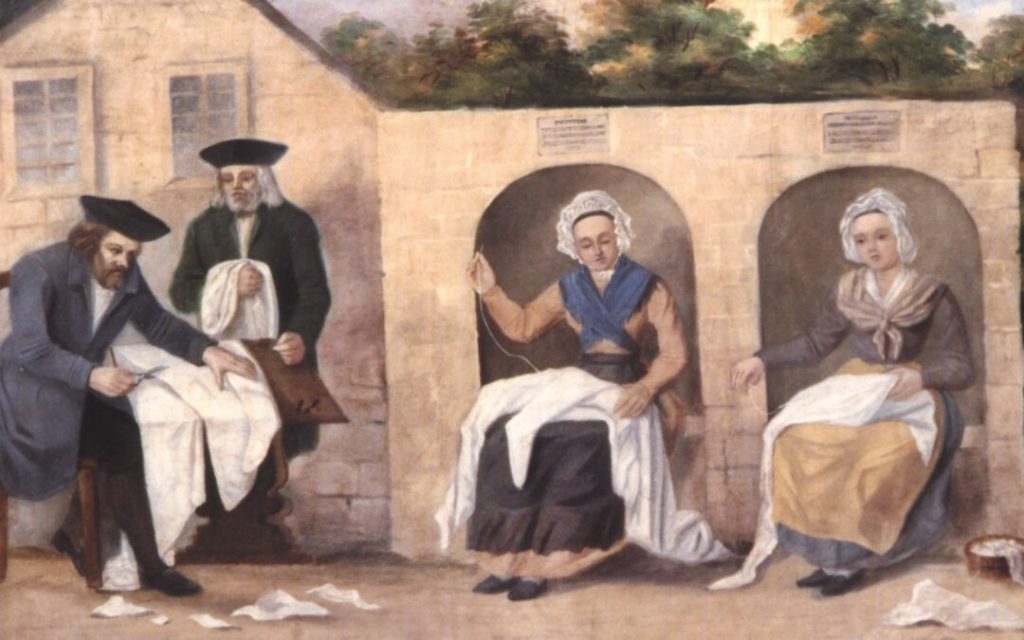
Not coincidentally, Adar 7 is the day that many Jewish Burial Societies, Chevrah Kadishas, gather to honor their sacred work. It is both a day of reflection and of celebration. Many members choose to fast on this day, to say special prayers, and to ask forgiveness for any errors they may have made in honoring the deceased. Burial Societies also traditionally hold a banquet where they honor volunteers and reflect on the sacred nature of their service.
“It seems to me that consoling mourners takes precedence over visiting the sick, since consoling mourners includes kindness with the living and with the dead,” writes the great medieval scholar Maimonides in his Mishna Torah. Indeed, tending to the dead is a special kind of mitzvah, a mitzvah of Chesed shel Emet, “an act of kindness performed with absolute sincerity”, since the dead can neither thank nor repay those who tend to them.
By choosing the 7th of Adar, Moses’ Yahrzeit, to honor the volunteers in the community who perform this work, the connection is made to the burial of Moses, who, according to the Torah was buried by God. In this way it is a reminder of the divine partnership with the Blessed Holy One in honoring the dignity of every human being, both living and dead.
 Rabbi Marc D. Rudolph
Leave a comment