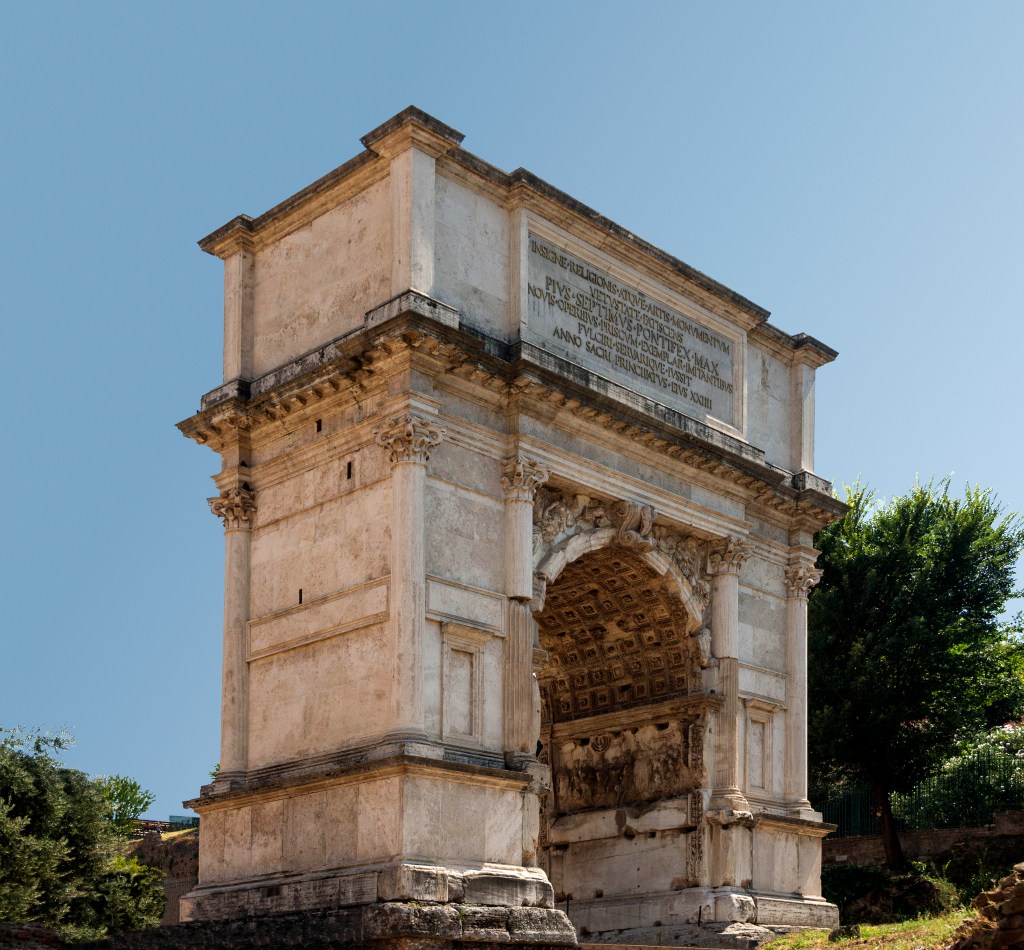
The Menorah is one of the oldest Jewish symbols. In the Book of Exodus, G-d shows Moses the design of the Menorah, which is then executed by the artisan Bezalel. It is made out of one block of pure gold. In this week’s Torah portion, (Leviticus 24:1-4) Aaron is commanded to light the Menorah in the Tabernacle every evening. Perhaps the most famous depiction of the Menorah, the one that shapes our idea of what the Menorah in the Temple looked like, is found in bass relief on the Arch of Titus in Rome. After the Roman general Titus destroyed the Temple in Jerusalem in 70 CE, Rome erected a triumphal arch at the entrance of the Roman Forum to commemorate the event. The south panel of the arch depicts the sacred objects looted from the Temple and brought to Rome. The most prominent among them is the Menorah.

The menorah depicted on the Arch of Titus is quite unlike the ones depicted in antiquity in the Land of Israel. The Menorah found on coins, burial sites and ancient synagogue floors in Israel has a tripod as its base.
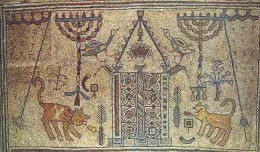
The founders of the modern State of Israel decided to use the Menorah as the central symbol on the national emblem. But which depiction of a Menorah should they use? The Menorah depicted on the Arch of Titus represented defeat, destruction and humiliation. The other choice was to use the model that was widespread in antiquity, the tripodal model.
It may surprise you what they chose, and why. The Menorah that appears on the official Emblem of the State of Israel, flanked by two olive branches, is the Menorah as depicted on the Arch of Titus. In using this image, the founders took a symbol that represented defeat, destruction and humiliation and turned it into a symbol representing triumph and rebirth. While the Roman Empire had its day and would be no more, the Jewish people had endured and would rise again in a modern Jewish State. The Menorah that had been carried away to Rome would now, at least symbolically, be returned to the Land of Israel.


 Rabbi Marc D. Rudolph
Leave a comment