Our holy Torah knows of no perfect people. Even the founder of our religion, Abraham, the first Hebrew, is a flawed individual. Between the ages of 75, when, as Abram, he received his promise from God that he would become “a great nation” to the age of 99, when Sarah gave birth to Isaac, the Ramban describes Abraham as having “wandered aimlessly like a lost sheep”. (Ramban on Genesis 12:1). His journey was one of stops and starts, of moving forward and backward, of doubts and certainties. If a great person is perfect, we might be inclined to worship them. If they are recognizably human, portrayed with their shortcomings and frailties, we are more likely to think we can emulate them.
Let’s examine Abraham’s role as a family man. Abraham and Sarah cannot have children, so Sarah suggests that Abraham betroth her maidservant, Hagar. “Perhaps I will be built up through her,” says Sarah. Apparently, the custom of the time was any child of a woman’s maid through her husband would be counted as the child of the woman herself. Once pregnant, Hagar gets haughty. She thinks she is better than Sarah. Sarah is greatly vexed by this. Can you blame her? Here you agree that your maidservant can have relations with your husband for the purpose of pro-creation, and the maid begins to laud it over you! So, Sarah complains to Abraham. Does Abraham go and talk to Hagar about it? Does he explain to her that we all have to get along in this household, and it is best that you treat Sarah with respect; she is, after all, my first wife and I love her dearly? Does he talk to Sarah about it, after all, Hagar is only a young woman and like all young women she is a little full of herself, especially now that she is giving us a child, and we must be patient with her, I’ll talk to her, and you let me know if this keeps happening. No. When Sarah complains to Abraham, Abraham seems to get angry and impatient with her. “She’s your maidservant,” he snaps back at Sarah, “Do with her as you see fit!” That leaves Sarah with nowhere to go with her anger and frustration than to take it out on Hagar, which she does. (Genesis 16:1-6)
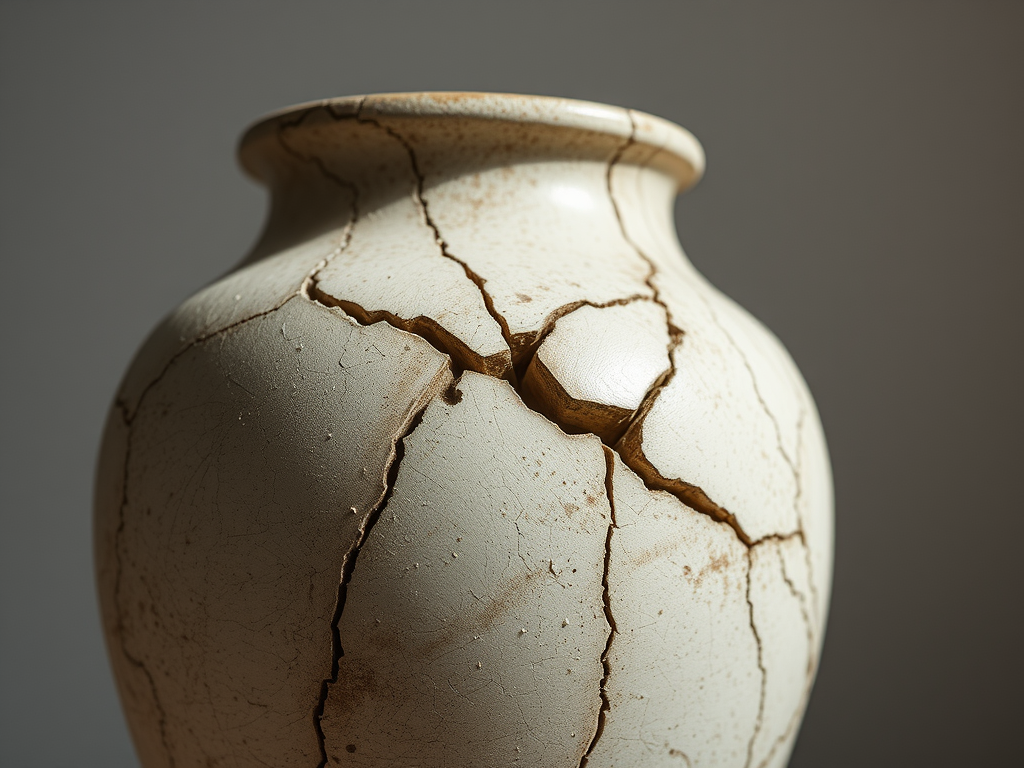
Despite Abraham’s shortcomings as a husband, he is still considered a righteous person. He is sometimes harsh, sometimes confused, sometimes impatient, yet he is still worthy of God’s trust and of our esteem. The sage Alexandri, who lived during the time of the Talmud, used to say, “When a common man uses a broken vessel, he is ashamed of it, but not so with the Holy One. All the instruments of His service are broken vessels.” Our tradition understands that we are all flawed human beings, even the greatest among us. We all are obliged to work toward repairing our flaws. But our brokenness does not, and should not, excuse us from acting in the world to alleviate pain, to address suffering, and to do good works. We can grow every day toward reaching our full potential as husbands and wives, as mothers and fathers, as friends, as workers, and as citizens. In doing so, we fulfill our Creator’s mission for us here on earth.
 Rabbi Marc D. Rudolph
Leave a comment