Our Cantor was about to call me up for an aliyah. He turned to me. “Is your father’s name “Avraham Laib, Avraham Lev, or Avraham Lave?” he asked.
“That’s right,” I replied, not able to distinguish one pronunciation from the other.
You see, our Cantor is a very learned man, and an Israeli as well. To his ear, these were distinctly different names, with different pronunciations. To my ear they were all the same. He wanted to be sure he called me to bless the Torah with the correct name.
He continued. “If your father spelled his name with two “yuds” [לייב] you pronounce it “laib”. If the name does not have a “yud” [לב] you pronounce it “Lev”.
“I think it might be spelled with one ‘yud’,” I replied.
He just shook his head. That spelling did not make sense to him.
Later that morning I went to http://www.findagrave.com and to view his gravestone. Inscribed on the monument was “Avraham Lev/Lave/Laiv”. Not with two “yuds” [לייב], not with no yuds, [לב], but with one “yud” [ליב].
“In Israel we would pronounce that ‘Leev’,” he replied when I returned the following morning with this information, “Like in ‘Liv Ullmann’.”
Now I was really into it! Game on! So I decided to check the “Bible” of Hebrew names, The Complete Dictionary of English and Hebrew Names by Alfred J. Kolatch, known simply as Kolatch, among those “in the know”. There was my father’s name with one yud! [ליב]. Only Kolatch tells me that you pronounce it “LEIB”. Is that LIBE, with a “long I”? I have never pronounced it that way. I know my Dad never pronounced it that way.
Are you still with me? I don’t know why I get obsessed with these kinds of issues. Earlier this year I wrote about the internal conflict I had with my first name in Hebrew, “Mordechai”. (See the post titled “My Jewish Name” September 22). That post received 2 “likes” which remains a record for me. It also attracted a subscriber! One who wasn’t a friend or family member! So here is a shout out for you, Sebastiane! (and check out his website)
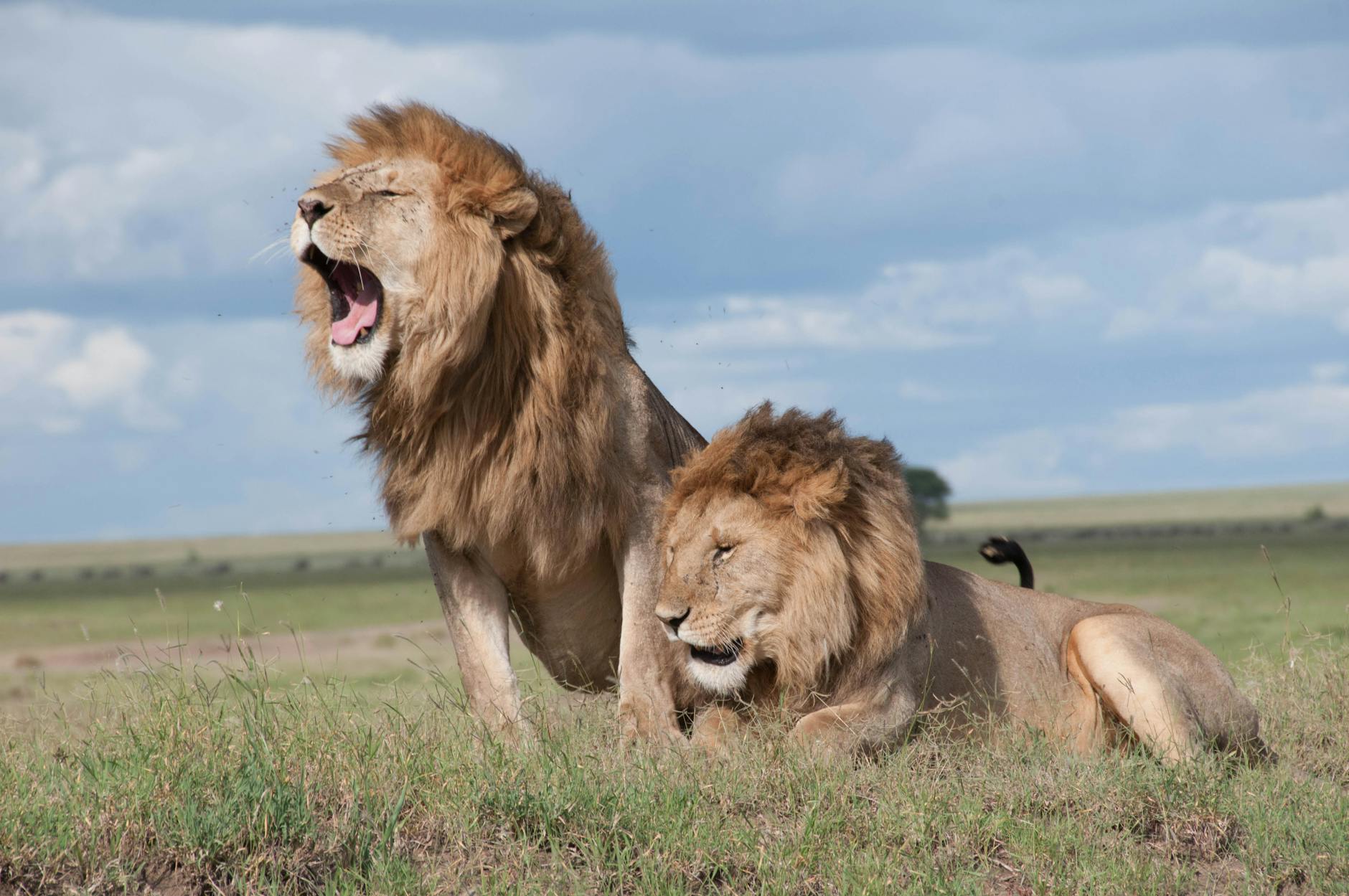
Follow me down this rabbit hole. Kolatch informs me that “Leib” is a Yiddish form of the German name “Loeb”, meaning “Lion”. Furthermore, he (Kolatch) informs me that my father’s English name, Leonard, is “A French form of the old High German, meaning “strong as a lion”. Did my Yiddish speaking gramma and grampa know that when they named him “Leonard”? My father was named after his mother’s brother, Avram Lev who made it to Ellis Island but was sent back to the old country because he was sick. The way they pronounced that in Babruysk, Bellarus, where Avram Lev was born, would be how my Dad and his family would have pronounced it.
Lions are important symbols in Jewish life. There are more than 150 references to lions in the Bible. Lions lived in the Land of Israel up until Crusader times and beyond. The last wild lion in the Land of Israel was killed near Megiddo toward the end of the 16th century. Joseph Karo begins the Shulkhan Aruch, his Code of Jewish Law, with the following, “A person should strengthen themselves like a lion to rise in the morning to serve the Creator, so that it is he/she who awakens the dawn.” It’s reassuring to know that I am not the only one who has difficulty getting up in the morning.
The Bible uses many words for “Lion”. “Lavi” and “Leviah”, “Layish’, “Gur”, “Aryeh” and “Ari”, Shachal and “Kefir”. The latter two words are used in Psalm 91:13-14 to evoke God’s protection:
עַל כַּפַּיִם יִשָּׂאוּנְךָ פֶּן תִּגֹּף בָּאֶבֶן רַגְלֶךָ:
{יג} עַל שַׁחַל וָפֶתֶן תִּדְרֹךְ תִּרְמֹס כְּפִיר וְתַנִּין
“God will carry you in His hands lest you strike your foot on a rock/ You will trample the lion and the serpent, crush the lion cub and the cobra.”
Which brings us to another name to remember, and, in a sense, the purpose of this blog post. A little boy named Kefir, only 10 months old at the time, was kidnapped by Hamas on October 7. “Kefir” was not named after a kind of yogurt. His name means “lion cub”. He disappeared into Gaza along with his 4-year-old brother, Ariel — “Lion of God”, his mother, Shiri and his father Yarden. Perhaps Shiri and Yarden were inspired to name them after the beautiful manes of red hair that both children have. In any case, we have not forgotten them, nor any of the hostages that remain in Gaza. The world should stop advocating for a Palestinian State or a cease fire and instead roar like a lion that the hostages be released. That is the first step to ending this war.
Photo by Iurii Ivashchenko on Pexels.com
 Rabbi Marc D. Rudolph
Leave a comment