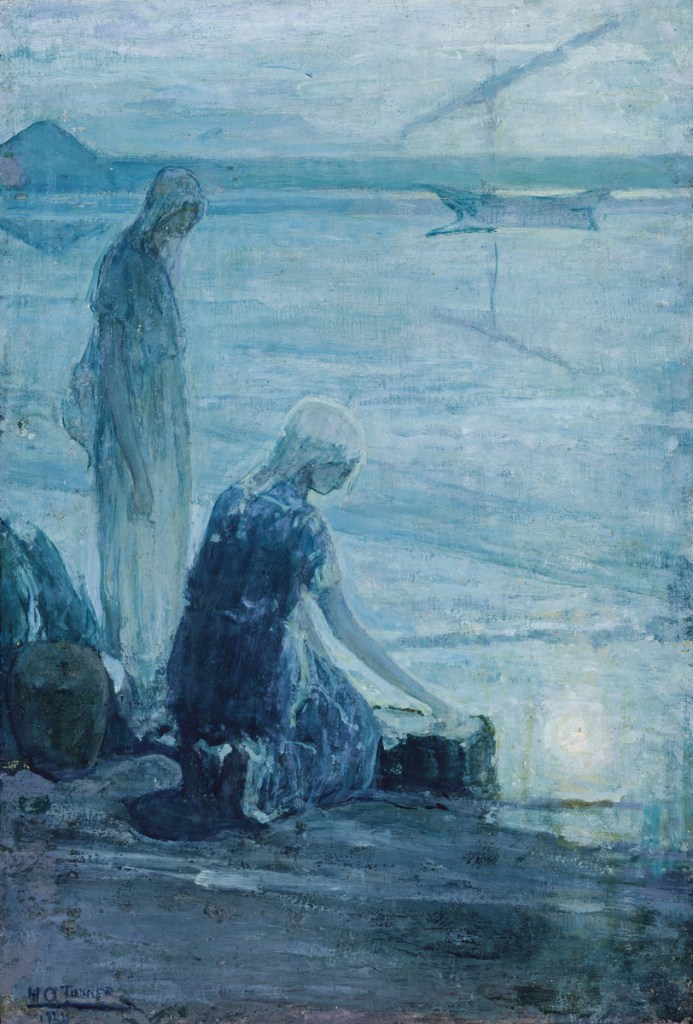
The Book of Exodus opens with a list of names of Jacob and those who went down with him to Egypt. This gives the book its name in Hebrew, “Shemot” or “Names (of)”. We are quickly introduced to Pharaoh, then to Moses. But we are introduced to important women as well. There are Shifra and Puah, two midwives who defy the Pharoah’s demand to kill all the baby boys at birth. There is Yocheved, Mose’s mother, and Miriam, his sister. There is Zipporah, Moses’ wife. Then there is a woman identified only as “the daughter of Pharaoh”. She draws baby Moses from the water and raises him as her own. She does not have a name. She is known only in relation to her famous father.
The final book of the Hebrew Bible, Chronicles, also begins with a list of names. The first eight chapters is filled with names, establishing a genealogy for all of the families of the People of Israel up until the time of the Second Temple. 1 Chronicles 4:18 mentions one “Batyah, the daughter of Pharaoh”. The rabbis identified her with the unnamed daughter of Pharaoh who raises Moses. Like the detectives in the British crime drama “Unforgotten”, the rabbis restore her identity long after her death. According to the rabbis, God gave her the name of “Batyah”. “Moshe was not your son, yet you called him your son,” says God. “Even though you are not my daughter, I will call you “My Daughter” — Bat-Yah — the daughter of God”.
She was certainly worthy of the name. She defied her own father’s cruel edict and had compassion for a child from a despised segment of Egyptian society. “This is a Hebrew child,” she exclaimed. (Ex 2:6). She saw suffering and did not turn away. She behaved selflessly, without concern for her own welfare. She rejected the racism and idolatry of her day.
The midrash teaches that every person has three names. The first is the one given by one’s parents. The second is the one that people know them by. The third is the one that one acquires for oneself.
We don’t know the name that she was given by her parents. She was known to the people as “daughter of Pharaoh”. She acquired the name “Batyah” — daughter of God — for her courage, independence and compassion.
Shabbat Shalom
Photo: Henry Ossawa Tanner, Moses in the Bullrushes, 1921, oil on wood panel, 22 3/8 x 15 1/8 in. (56.8 x 38.5 cm), Smithsonian American Art Museum, Gift of Mr. and Mrs. Norman Robbins, 1983.95.197
 Rabbi Marc D. Rudolph
Leave a comment